
Are you tired of sifting through endless guides that barely scratch the surface of what you need? You’re not alone. When it comes to RPG core mechanics, understanding the nitty-gritty can transform your gaming experience from mediocre to mind-blowing.
Let’s face it, you don’t want to waste time on fluff. You want actionable takeaways. That’s what we’re diving into here.
Ever wondered why some players seem to glide through levels while others get stuck? It’s not magic. It’s mechanics.
If you’ve ever felt lost in the labyrinth of rules, you’re in the right place. This isn’t just another generic overview. We dig deep (maybe too deep) into what actually matters in RPGs.
You’re here for answers. You want to know how to master the game rather than letting it master you. By the end, you’ll have a clear grasp on how these mechanics can give you the edge.
Trust me, you won’t want to miss this.
The Heartbeat of Adventure: Quest, Combat, and Reward
Let’s talk about RPG core mechanics. They’re the heartbeat of every RPG, driving us forward. Think of it as a cycle: quest, combat, reward.
This loop keeps us hooked.
Quests are where it starts. From “kill ten rats” to “slay the dragon,” they push the story. Without quests, why even play?
They give purpose, turning pixels into epic tales.
Combat is the challenge. It’s where you prove yourself. Some games, like “Baldur’s Gate 3,” use turn-based combat.
Others, like “The Witcher 3,” go real-time. Different styles, same thrill. It’s about overcoming obstacles and feeling like a hero.
Then comes the reward, the sweet payoff. Whether it’s Experience Points (XP), loot, or story progression, rewards make it all worth it. They’re what keep us coming back, ready for the next quest.
Without rewards, the loop dies. It’s that simple.
And if you’re into more than RPGs, you might want to check out some important strategies for competitive fps games. It’s a different game, but the thrill? Just as intense.
The Hero’s Journey: Character Progression Unveiled
Character progression sits at the heart of RPG core mechanics. It’s like watching a band go from garage gigs to sold-out arenas. The classic system of Experience Points (XP) and Levels is beloved for a reason.
You kill a dragon, complete a quest, maybe even find some hidden caves, and boom (XP) in the bank. Hit enough of those, and you level up. It’s the ultimate pat on the back.
But let’s not get stuck in a rut. Skill Trees and Perk Systems offer a twist. Picture a tree.
Your character starts as a sapling, and choices branch out as you progress. In something like ‘Path of Exile,’ you have a forest of branches. Endless possibilities.
Meanwhile, other games prefer streamlined choices. You’re not overwhelmed by options, just focused and deadly.
Then there’s the ‘Learning by Doing’ model. Think ‘Skyrim’ or ‘Oblivion.’ Want to sneak better? Start sneaking.
Use a sword more, and watch your ‘One-Handed’ skill soar. It’s intuitive and reflects real life. You get better at what you practice.
So which is the best system? Depends on your flavor. Do you like structure or freedom?
If you’re as intrigued by these mechanics as I am, you should dive deeper and lets talk about core game mechanics.718063. It’s a conversation worth having, especially when games are more than just pixels on a screen.
Crafting Your Character: Attributes and Skills Unleashed
In RPGs, attributes (or stats) are the backbone of any character. Think of them as the raw numbers that define what your character is made of. Take the S.P.E.C.I.A.L. system from ‘Fallout’ for example.
It’s a classic. Strength, Perception, Endurance, and so on. Each attribute influences what you can actually do in the game world.
Strength boosts melee damage and lets you carry more junk (who doesn’t love hoarding?). Intelligence? It opens up new dialogue options.
But here’s the kicker: attributes aren’t everything. They’re just the foundation. Skills are where the magic happens.
Skills like Lockpicking or Persuasion let you interact with the world in practical ways. They’re the practical applications of your attributes.
Now, the link between attributes and skills? It’s key. A high Dexterity can mean a bonus to your Archery skill (or make it level up faster).
This connection is the essence of character-building. It’s what makes RPG core mechanics tick.
And if you’re a fan of sneaking around. Like in the “Art Of Stealth Sneak Victory”. You’ll appreciate how attributes and skills intertwine to boost your stealth game.
Intrigued? Check out the Art Of Stealth Sneak Victory for more takeaways.
So, what’s your character gonna be known for?
The Hand of Fate: How Dice Rolls and RNG Shape Your Story
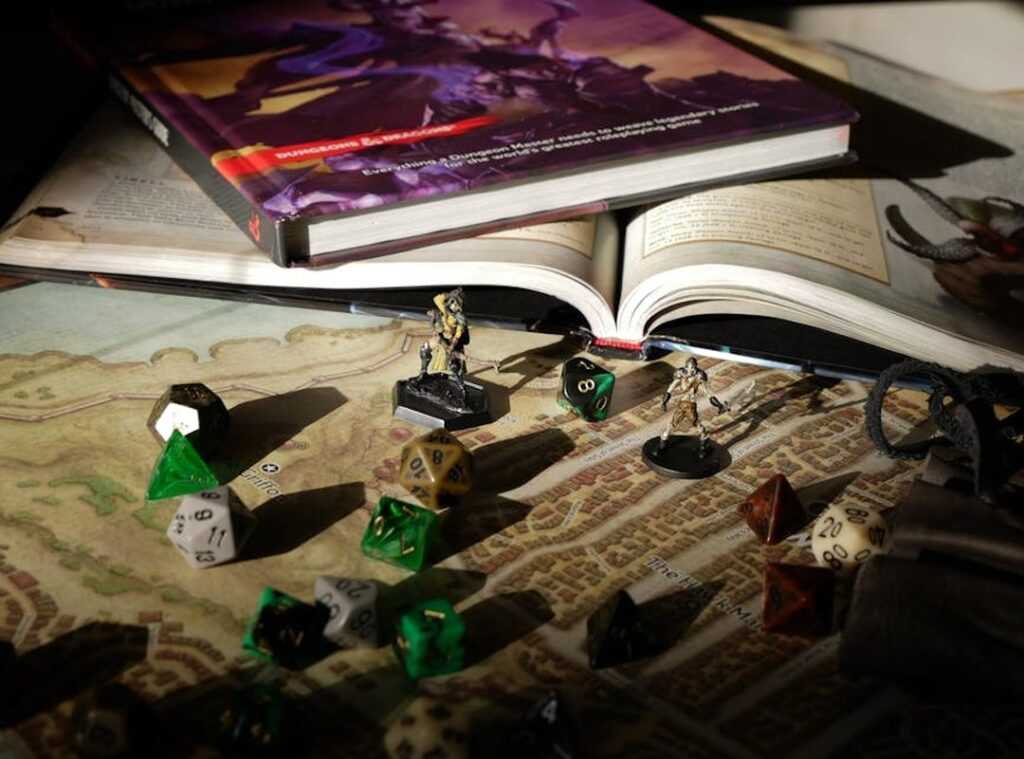
Chance. It’s the heartbeat of a good RPG, bringing suspense and unpredictability into every session. Have you ever rolled a d20 in “Dungeons & Dragons” and held your breath?

That’s the magic right there. This little piece of plastic (the 20-sided die) isn’t just a tool (it’s) a storyteller. Every roll determines success or failure, whether you’re trying a skill check or making an attack roll.
Now, think about video games for a moment. They’re not so different. Random Number Generation, or RNG, is the digital cousin to our beloved dice.
It’s the unseen force that decides if you hit that boss or miss frustratingly. Picture this: to land a hit in a game, the code might roll a random number between 1 and 100. If you’ve got a “chance to hit” stat of 75, anything 75 or lower connects.
Simple, right? But this doesn’t only shape combat. It’s woven into loot drops and key hits too.
Imagine opening a chest and hoping for that rare item. This is RNG pulling the strings. It’s a core part of RPG core mechanics, where every encounter feels fresh. (Yes, sometimes it’s maddening, too.) But isn’t that the thrill of it?
The uncertainty keeps us hooked. We might curse the RNG gods, but we keep coming back for more. Because in the chaos, there’s always hope for a lucky break.
Beyond the Blade: Building a Living World
Ever feel like games are just menus and combat? Let’s talk about how RPG core mechanics go so much deeper. Look at Mass Effect’s Paragon/Renegade system.
It’s not just dialogue options or stats dressed up (your) choices can seriously shake up the story and your relationships. Remember choosing to help a stranger and ending up in a whole new quest line? That’s the kind of stuff that makes a world feel alive.
And what about crafting? Gathering resources isn’t just filler. Grinding for some rare material to craft a legendary sword or brew a potion?
It’s its own kind of triumph (without the risk of getting skewered). Crafting systems let us progress without endless battles.
Exploration systems reward our curiosity. Who doesn’t love stumbling upon a hidden chest after wandering off? Games weave secrets and stories into the space, making discovery itself a reward.
Do you need quests when you have the open world?
Open up the Secrets of Your Next RPG
So, you’ve cracked the code behind your favorite RPGs. The mystery of RPG core mechanics is no longer a puzzle. It doesn’t kill the magic.
It amplifies it.
Next time you dive into a game, watch those systems work. Spot the core loop. Analyze that skill tree.
Respect the RNG. It’s like seeing the gears turning behind the scenes.
Curious? Ready for more? Head over to popguroll.com.
We’re the #1 community for gaming takeaways. Get deeper into gaming mechanics and strategies. Your favorite worlds will feel brand new.
Happy gaming, adventurer!