
If you’re searching for clear, up-to-date insights on ai in video games, you’re likely trying to understand how it actually shapes gameplay—not just in theory, but in the titles you play every day. From smarter enemy behavior and adaptive difficulty systems to procedurally generated worlds and advanced NPC decision-making, AI is no longer a background feature—it’s a core design pillar.
This article breaks down how ai in video games influences core mechanics, competitive balance, roll-based systems, and even esports team dynamics. We’ll explore how AI impacts player strategy, in-game economies, and performance optimization, while separating real innovation from marketing buzz.
Our analysis draws on current gaming trends, gameplay data, developer insights, and competitive scene observations to ensure accuracy and relevance. Whether you’re a competitive player, casual gamer, or industry observer, you’ll gain a practical understanding of how AI is reshaping modern gaming experiences—and what that means for the future of play.
Remember the first time you played early Mario? Enemies moved in fixed patterns, levels never changed, and once you mastered the timing, the mystery was gone. Fast forward to today, and games feel alive.
The problem is simple: modern players crave challenge and replayability. Static scripts get predictable fast.
That’s where ai in video games steps in. Developers now use machine learning—systems that learn from data—to create enemies that adapt to your tactics and worlds that respond to your choices.
If you want longer-lasting games, look for dynamic AI systems and procedural design. They’re the difference between routine and adventure.
Beyond Smarter Enemies: AI-Powered NPCs and Dynamic Worlds
For years, artificial intelligence in gaming meant one thing: enemies that could chase you down a hallway without getting stuck on a wall. Pathfinding—the system that calculates how a character moves from point A to B—was the gold standard. But today, ai in video games goes far beyond simple navigation.
From Scripted Reactions to Emergent Behavior
Modern NPCs often rely on behavior trees, a decision-making framework where characters evaluate conditions and choose actions dynamically. Instead of following a rigid script, they prioritize goals—seek cover, protect allies, flank the player—based on real-time data. In The Last of Us, enemy squads communicate and reposition strategically, creating encounters that feel unscripted. Likewise, Red Dead Redemption 2 features gang territories that shift organically, influencing ambushes and regional tension.
Some critics argue this complexity is overkill. If players can’t see the code, does it matter? Actually, yes. The benefit isn’t the algorithm—it’s the unpredictability. When systems interact, emergent behavior (unexpected outcomes from simple rules) appears. That’s what makes firefights feel tense instead of repetitive.
Beyond combat, AI drives systemic world-building. Wildlife hunts prey. Civilians follow daily routines. Weather and economy systems adjust conditions independently of player input. These interconnected mechanics create persistence—the sense that the world continues even when you log off.
Of course, handcrafted scripting can deliver tighter storytelling. However, dynamic systems make players feel embedded in a living ecosystem rather than cast as the sole mover of events (you’re influential, not omnipotent). Pro tip: games with layered AI systems often reward observation over aggression—watch patterns before acting.
Ultimately, smarter NPCs aren’t just features. They’re the backbone of worlds that breathe.
Procedural Content Generation (PCG): Crafting Infinite Experiences)

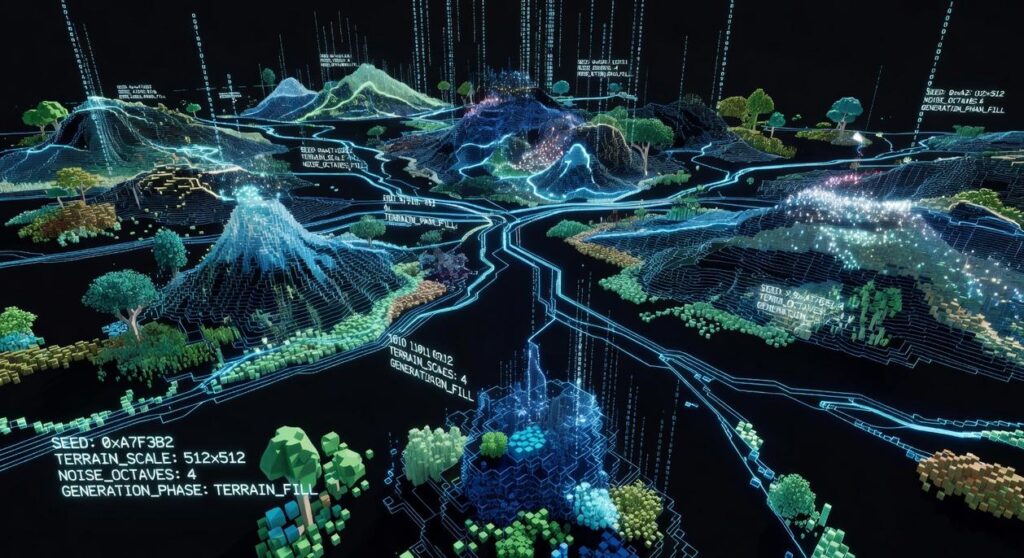
Procedural Content Generation (PCG) is an AI-driven method of creating game content algorithmically instead of building every asset by hand. In simple terms, developers design the rules, and the system generates the results. Rather than crafting 1,000 unique swords manually, designers create logic for stats, rarity, and effects—then the engine produces endless variations (yes, that’s how you end up with a flaming ice dagger).
Infinite Replayability by Design
The standout feature of PCG is replay value. Because content is generated dynamically, no two sessions feel identical.
- No Man’s Sky uses algorithms to generate over 18 quintillion planets, each with distinct ecosystems (Hello Games, 2016).
- The Diablo series randomizes dungeon layouts and loot tables, keeping item hunts unpredictable (Blizzard Entertainment).
This variability keeps players adapting. You’re not memorizing a map—you’re responding to it. That unpredictability fuels engagement and long-term retention (a core metric in modern game design).
Some critics argue handcrafted levels feel more meaningful. That’s fair. Scripted design can deliver tighter storytelling. But well-implemented PCG blends structure with surprise, giving players both narrative anchors and emergent discovery.
The Developer’s Role: Controlled Creativity
PCG doesn’t replace designers. It operates within constraints they define—rules for balance, pacing, and theme. Think of it as a power tool, not an autopilot. In discussions about ai in video games, this distinction matters: systems generate possibilities, but humans shape the experience.
Pro tip: The best PCG systems limit randomness to preserve gameplay balance.
As covered in top gaming trends dominating 2026 what players need to know, adaptive systems are central to modern engagement. Ultimately, PCG enhances discovery, challenge, and that irresistible “just one more run” feeling.
Adaptive Gameplay: The Game That Learns From You
Adaptive gameplay is like a personal trainer living inside your console, quietly adjusting the weight every time you lift. Through Dynamic Difficulty Adjustment, ai in video games monitors your performance in real time and tunes the challenge to keep you in a state of flow—that sweet spot between boredom and frustration. Too easy? It tightens the screws. Too hard? It eases off (no rage-quit required).
The best case study is Left 4 Dead’s AI Director. Think of it as a horror movie conductor, orchestrating tension instead of violins. It tracks player health, accuracy, and even pacing, then controls zombie spawns, item placement, and attack waves accordingly. If your squad is limping forward, it grants breathing room. If you’re coasting, it unleashes chaos.
This tech also personalizes playstyles. Rely too much on cover? The system may spawn more sniper enemies, nudging you to rethink tactics. It’s like a chess opponent that studies your favorite openings and counters them.
Some argue this reduces “pure” challenge. But in reality, it’s player-centric design at its finest, keeping novices and veterans equally hooked. Engagement stays balanced, like a thermostat for your adrenaline levels. feels freshly tuned.
The next frontier in gaming is Generative AI—systems like large language models that create text, dialogue, and ideas on the fly. Instead of scripted lines, NPCs could hold unscripted conversations, responding to your typed or spoken questions with context-aware answers. That means fewer repetitive quests and more personal stories (no more “arrow to the knee” moments).
Even better, players could design:
- Custom quests from simple prompts
- Unique weapons and lore
- Entire characters with backstories
In short, ai in video games shifts worlds from reactive to collaborative—giving you agency, creativity, and endless replay value. The payoff is deeper immersion and ownership.
The Dawn of the Intelligent Game
From pixelated foes marching in fixed patterns to today’s adaptive, procedurally generated worlds, games have evolved from scripts to systems. Yesterday’s design was A: predictable levels, memorized boss fights, static outcomes. Today’s model is B: responsive enemies, shifting maps, personalized challenges. The difference? Intelligence. Static gameplay once meant replaying same beats; now ai in video games studies your style and adjusts accordingly. Some argue handcrafted experiences are tighter and more balanced. Fair. Yet dynamic systems respect player skill, extending longevity without repetition. So next time you play, look beneath surface and appreciate the craft.
As AI continues to revolutionize the gaming landscape, one can’t help but wonder how its advancements might influence the highly anticipated release of titles like Obernaft, which many are speculating about for 2023 – for more details, check out our Is Obernaft Coming Out In 2023.
Level Up Your Competitive Edge
You came here to understand how ai in video games is reshaping mechanics, esports strategy, and performance optimization. Now you can see how smarter NPC behavior, adaptive difficulty, predictive analytics, and roll-based gameplay insights are redefining what it takes to win.
The reality is this: if you’re not adapting to AI-driven systems, you’re already behind. Competitive players and teams who ignore these evolving mechanics struggle with inconsistent performance, poor decision timing, and inefficient setups.
Act on what you’ve learned. Track AI-influenced meta shifts, refine your roll strategies, optimize your setup for data-driven play, and study how top teams leverage intelligent systems to gain an edge. The competitive scene rewards players who adjust fast.
If you’re serious about staying ahead, dive deeper into advanced gameplay breakdowns and performance insights trusted by dedicated competitive players. Don’t let outdated strategies hold you back—start optimizing today and take control of your next match.