
Most aspiring competitive players think sharper aim or faster reactions are the secret to winning. Yet even mechanically gifted squads fall apart without structure. The truth is that victory is built on clearly defined esports team roles and how well they function together. This guide breaks down the essential roles that form the backbone of successful teams across tactical shooters and MOBAs, going beyond surface-level definitions. You’ll discover the responsibilities, mindsets, and interdependencies that transform five solo players into one coordinated unit—giving you a practical blueprint for building smarter compositions and winning more consistently.
The Mastermind: Deconstructing the In-Game Leader (IGL)
Start with an anecdote about X: I remember watching a ranked Valorant match unravel because no one wanted to make the call. Five mechanically gifted players, zero direction. We lost 13–3. That’s when I understood what an In-Game Leader (IGL) really is—the team’s brain.
The IGL handles macro strategy (big-picture decision-making that shapes the round or match), manages the team’s economy (how in-game currency is spent), and adapts on the fly. In CS:GO or Valorant, that means calling a last-second A-site execute after spotting a defensive rotation. In League of Legends, it’s directing a Baron setup instead of chasing a low-health kill (yes, we’ve all thrown games that way).
Some argue raw fragging power matters more. After all, highlight reels win fans. And it’s true—mechanical skill can carry rounds. However, data from professional CS tournaments consistently shows structured mid-round calling improves conversion rates in advantage scenarios (HLTV match analytics). Structure wins championships; chaos wins clips.
Beyond the obvious, the IGL processes fragmented teammate info into the highest-probability call under pressure. That requires game sense (intuitive understanding of timing and positioning), concise communication, emotional control, and decisive commitment.
Within esports team roles, the IGL isn’t always the star—but they’re almost always the reason the stars shine.
First to the Fight: The High-Stakes Role of the Entry Fragger
The Entry Fragger is the tip of the spear. In tactical shooters, that means they’re the first player to swing a corner, challenge an angle, and test the enemy’s defenses. In my opinion, it’s the most mentally demanding role on the roster. You’re volunteering to be the first name in the kill feed—good or bad.
Now, some argue that entry fragging is just reckless aggression dressed up as strategy. I disagree. True entry work is calculated aggression: using flashes, stuns, or smokes (collectively called “utility,” meaning non-gun abilities that shape fights) to create favorable duels. Think less “Leroy Jenkins,” more coordinated breach from a heist film.
However, even the best Entry Fragger is powerless without support. They rely on teammates to clear secondary angles and secure the trade—an immediate revenge kill if the entry falls. Without that synergy, the push collapses. With it, the reward is massive: a 5v4 advantage that statistically tilts the round in your favor (numbers matter in esports team roles more than people admit).
Ultimately, great entry players don’t just chase highlights. They create space. And space wins rounds.
The Unsung Hero: Why the Support Player is the Team’s Backbone
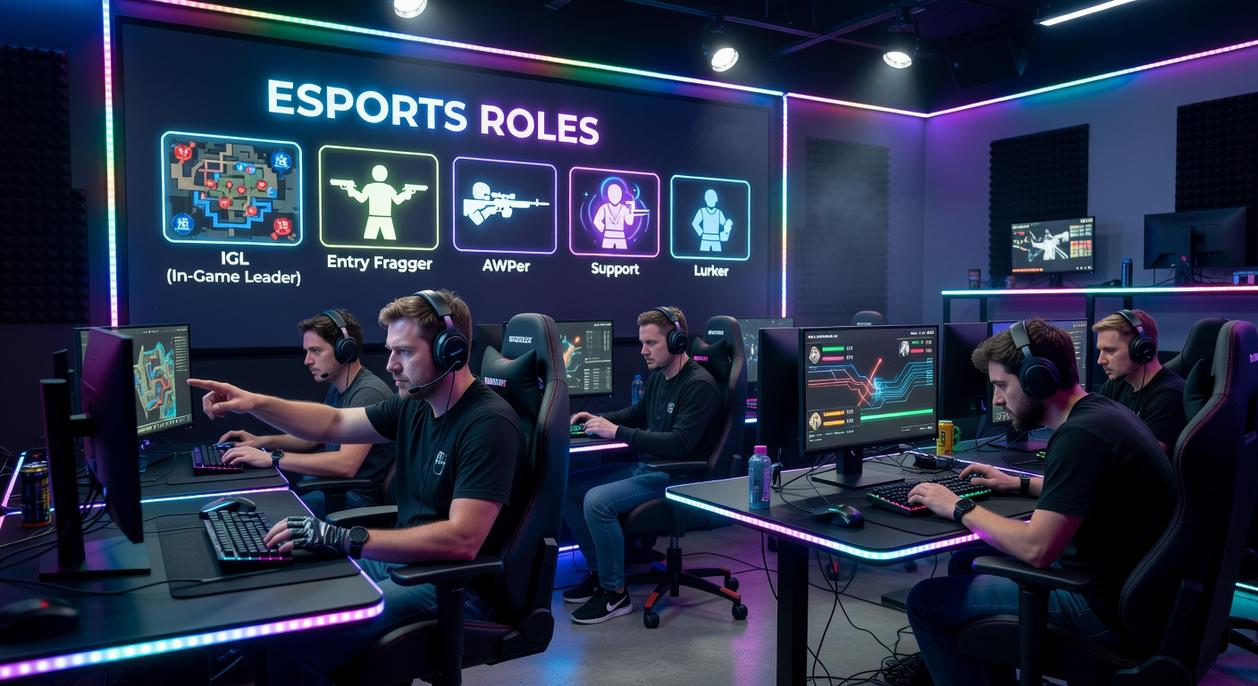
In every competitive title, flashy fraggers grab the highlights. However, beneath those montage-worthy plays sits the true stabilizer: the support. Their primary responsibility is simple in theory yet complex in execution—to enable teammates through precise utility usage. That means well-timed smokes to block vision, flashes to initiate safely, heals to reset fights, and information-gathering tools to predict rotations. In short, they create the conditions that make aggression possible.
Some argue the support role is for the least mechanically gifted player. On the surface, it might seem logical—fewer entry duels, fewer highlight moments. Yet that view ignores the deeper skill set required. Support demands elite map awareness, economy tracking, cooldown management, and positioning discipline. A mistimed flash can blind your own team (and yes, we’ve all seen that ranked disaster). Precision here directly translates to round wins.
The Anchor and the Clutch Factor
One defining sub-role is the Anchor—a defender trusted to hold a site alone. Using utility layering and off-angles, the Anchor delays enemy pushes long enough for rotations. This delay is measurable value: even five extra seconds can collapse an execute and preserve map control.
Moreover, because supports often survive longer, they frequently enter clutch scenarios—late-round, high-pressure situations where composure outweighs raw aim. Calm decision-making, sound cues, and utility conservation become decisive advantages.
Understanding these nuances within esports team roles reveals a bigger truth: structure beats ego. In fact, teams focused on building trust and synergy in professional esports rosters consistently outperform star-heavy lineups (Harvard Business Review, 2012, on team cohesion and performance).
The support may not top the scoreboard—but they often hold the team together.
The Wildcard: How Flex Players and Specialists Break the Meta
Every roster has star fraggers. Not every roster has a wildcard.
That distinction matters.
When we talk about esports team roles, most breakdowns stop at surface-level labels. But the real competitive edge lies in the players who bend those labels without breaking structure.
Primary Responsibility: The Flex player is the team’s Swiss Army knife—a competitor with a deep agent or character pool who can shift tactics mid-series. While critics argue that flex players lack mastery because they don’t “main” one pick, the data from multi-title tournaments shows adaptability increases win rates in map-diverse formats (HLTV event analyses, 2024). In practice, a flex swapping from entry to controller can completely alter tempo between rounds.
Then there’s the Lurker Sub-Role. Operating away from the pack, the lurker gathers information, pressures rotations, and punishes overconfidence. Some analysts claim lurking is selfish play. In reality, effective lurking manipulates enemy utility usage and forces defensive hesitation (think of it as chess, but with flashbangs). A well-timed flank can collapse a setup instantly.
Meanwhile, the Operator/AWPer dictates geography. By holding long sightlines and securing opening picks, this specialist reshapes how opponents move. Teams without a dedicated sniper often struggle to control large maps—statistics from ESL Pro League matches consistently show higher opening duel conversion rates tied to AWPer performance.
So what’s the unique advantage here?
- Flexibility disrupts prep-heavy opponents.
- Lurkers weaponize uncertainty.
- AWPers control space before fights even start.
In an era of anti-stratting and VOD review overload, unpredictability isn’t chaos—it’s leverage (and sometimes, it feels like watching a plot twist in a heist movie). Pro tip: the less predictable your composition, the harder it is to counter in a best-of-three.
From Roles to Results: Forging a Winning Team Dynamic
You came here to understand what truly makes a competitive roster click, and now you see the bigger picture. It’s not just about having an IGL who calls the shots, an Entry who creates space, a Support who enables success, or a Specialist who changes the pace—it’s about how seamlessly they trust and communicate with one another.
Disjointed teams lose to coordinated ones every time. Skill alone won’t fix poor synergy.
Now it’s your move: define your natural playstyle, lock into the role that maximizes your strengths, and build around players who complement you. Master the dynamic, sharpen your coordination, and start turning ranked chaos into consistent wins today.